Home › Food & water
Food and water
Food and water for an outage: how much to keep and how to store it
When the power goes out, the fridge starts warming up, and if you're on a well, the pump stops too. A few weeks of water and food you don't have to cook covers most of what can go wrong. None of it is complicated, and most of it is already in your kitchen.
I earn a commission from qualifying Amazon purchases made through links on this page. It doesn't change what you pay, and it doesn't change what I recommend.
How much to store
Water: one gallon per person per day
Ready.gov says to store at least one gallon of water per person per day, for drinking and sanitation. The CDC says to keep at least a 3-day supply and to try for 2 weeks if you can. FEMA's Food and Water in an Emergency also suggests two weeks for each person at home. For a family of four, that's 12 gallons for 3 days and 56 gallons for 2 weeks.
Plan on more than a gallon a day for:
- Pets. The CDC's hurricane guidance counts a gallon a day for each pet too. A cat needs less than a big dog, but it's an easy number to plan around.
- Hot weather. Ready.gov says water needs can double in very hot temperatures.
- Nursing mothers, children and anyone who's sick. Ready.gov notes they may need more.
Food: start with 3 days, build toward 2 weeks
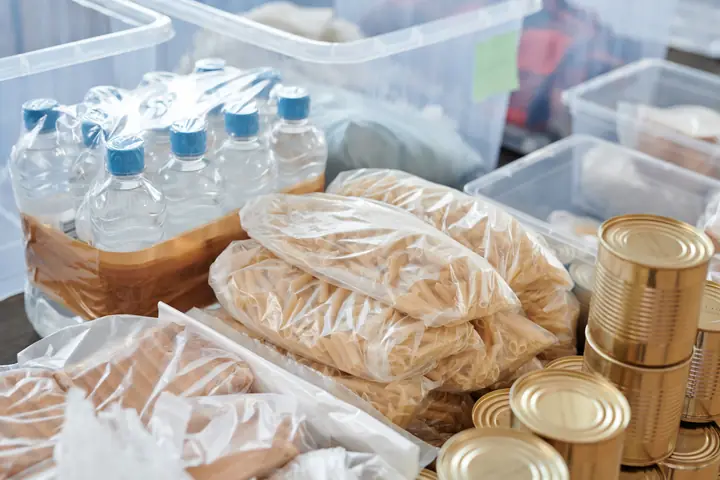
Ready.gov says to keep at least a several-day supply of food that doesn't need refrigeration, cooking, water or special preparation. FEMA suggests working toward two weeks, and points out that you probably have a good start on your shelves already. A practical way to get there is to buy a few extra cans or boxes of what you already eat each time you shop.
How much water and food do I need?
Put in the people and pets in your house and how many days you want to cover. The calculator uses Ready.gov's gallon per person per day and the CDC's gallon per pet.
Hot weather? Ready.gov says needs can double in very hot temperatures, so that setting doubles the gallons for people. It doesn't change the pets' number, but give them more too.
This is a planning estimate, not a medical recommendation. Babies, nursing mothers, older adults, people who are sick and anyone working hard in the heat may need more. Water for cooking freeze-dried food and for washing comes out of the same total.
Storing water
The easy option: store-bought water
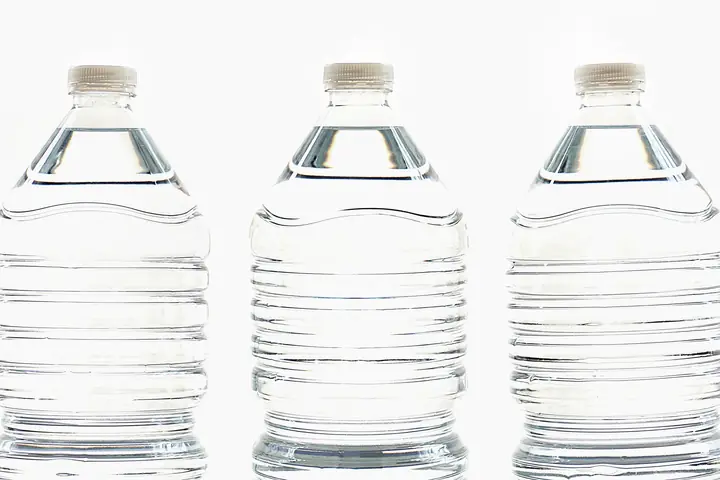
The CDC calls unopened, commercially bottled water the safest and most reliable emergency supply. Keep it sealed in its original packaging somewhere cool and dark, and go by the date on the package. Cases of bottles are easy to stack, and gallon jugs from the grocery store are about the cheapest way to start.
Filling your own containers
If you'd rather fill containers from the tap, use ones made for food or drinking water. The CDC says not to use anything that once held chemicals, like bleach or pesticides, and to avoid glass. Some common choices:
- Stackable bricks and jugs, like WaterBricks (3.5 gallons), Reliance Aqua-Tainers (4 to 7 gallons) or 5-gallon military-style jugs. They're light enough to carry when full and fit on shelves or under beds.
- 55-gallon drums for a lot of water in one spot. A full one weighs about 460 pounds, so fill it where it'll stay, and plan on a hand pump to get water out.
- A bathtub liner like the waterBOB. It's a food-grade bag that holds up to 100 gallons in a standard tub, with a pump to get the water out. It's for when you have a day or two of warning before a storm, not long-term storage. When I checked, the waterBOB was showing as unavailable on Amazon, so I haven't linked it.
How to clean and fill a container
These steps come from the CDC's preparedness guidance:
- Wash the container with dish soap and water, and rinse it well.
- Sanitize it with 1 teaspoon of unscented liquid household bleach mixed into 1 quart of water. Close it and shake so the solution touches every inside surface.
- Wait at least 30 seconds, pour the solution out and let it air-dry, or rinse it with safe water.
- Fill it with safe tap water and close it tightly.
- Label it "drinking water" with the date.
Where to keep it, and when to swap it out
Replace self-filled water every 6 months. That's the CDC and Ready.gov guidance. Store-bought water goes by its printed date.
Keep it cool, between 50°F and 70°F if you can, and out of direct sunlight. Sunlight breaks down plastic over time.
Keep it away from gasoline, pesticides and other chemicals. Plastic can let fumes through, so a garage shelf next to the gas can isn't a good spot.
An easy way to remember the swap: do it when the clocks change in spring and fall.
Making water safe to drink
If your stored water runs out, or your town issues a boil water notice, you'll need to treat water before you drink it. If the water might have chemicals or fuel in it, like floodwater, none of the methods below make it safe. Use bottled water instead.
Boiling is the surest method
The CDC says to bring water to a full rolling boil for 1 minute, or 3 minutes at elevations above 6,500 feet, then let it cool. Boiling kills bacteria, viruses and parasites. If the water is cloudy, let it settle and pour it through a clean cloth or coffee filter first. Pouring boiled water back and forth between two clean containers helps the flat taste.
The EPA's own page uses a lower cutoff for the longer boil, 5,000 feet. If you live high up, boiling for 3 minutes covers both.
Unscented bleach, when you can't boil
Use plain, unscented liquid bleach. Not scented, color-safe or splash-less bleach, and not anything with added cleaners. Check the label for the sodium hypochlorite percentage, then use the EPA's table:
| Water | 6% bleach | 8.25% bleach |
|---|---|---|
| 1 quart or liter | 2 drops | 2 drops |
| 1 gallon | 8 drops | 6 drops |
| 2 gallons | 16 drops (1/4 tsp) | 12 drops (1/8 tsp) |
| 4 gallons | 1/3 tsp | 1/4 tsp |
| 8 gallons | 2/3 tsp | 1/2 tsp |
Stir, then wait 30 minutes. The water should have a slight chlorine smell. If it doesn't, the EPA says to repeat the dose and wait another 15 minutes. Bleach loses strength over time, so the EPA says to use a bottle that's been stored at room temperature for less than a year. Keep a clean medicine dropper with it.
Filters
Portable filters like the LifeStraw and the Sawyer Squeeze push water through a very fine membrane. They're good at removing bacteria and parasites like Giardia, and they're light and simple. Bigger gravity filters, including Berkey-style countertop units and gravity bag kits, do the same job for a whole household without pumping.
Most filters don't remove viruses or chemicals. Hollow-fiber filters like the LifeStraw and Sawyer are rated for bacteria and protozoa, not viruses, and none of them remove fuel, pesticides or other chemicals. Only trust a virus or chemical claim if the maker says the filter is tested and rated for it. If a virus is a concern, the CDC's guidance on treatment options suggests filtering and then disinfecting, or just boiling.
Food that works without power
Shelf-stable basics
The best emergency food is food you already eat and know how to cook. These keep for months or years on a shelf:
- Canned goods. Meat, tuna, chicken, beans, soup, chili, vegetables and fruit. Many are fine cold, straight from the can.
- Rice, dried beans, pasta and oats. Cheap and filling, but they need water and heat, so count them as the long-outage part of your supply.
- Peanut butter, nuts and trail mix. A lot of calories in a small space.
- Crackers, cereal, granola and protein bars.
- Shelf-stable milk in boxes, or powdered milk.
- Freeze-dried meals like Mountain House or ReadyWise. They're light, keep for decades and only need hot water. Each pouch uses a cup or two, so count that against your water.
Food that needs no cooking
For the first few days, plan on food that needs no stove at all: canned meat and fish, canned fruit, peanut butter on crackers or tortillas, cereal with shelf-stable milk, dried fruit, nuts and bars. Ready.gov recommends this kind of food because it needs no refrigeration, cooking or water.
Don't forget the can opener
An electric can opener is useless in an outage. Keep a manual one with your food, along with plates, cups and utensils that don't need washing.
Babies, special diets and pets
- Infants. Ready.gov suggests ready-to-feed formula. If you have to mix powdered formula, use bottled water or boiled water that has cooled. Never use formula past its Use-By date.
- Special diets. Allergies, diabetes, gluten-free and low-sodium diets all need planning. Store foods each person can actually eat, and keep a list.
- Pets. Ready.gov's pet page suggests several days of pet food in an airtight, waterproof container, plus water and a bowl.
- Medications. Keep a few days of prescriptions on hand, and know which ones need refrigeration.
Cooking without power
Camp stoves, grills and generators go outside only. Ready.gov's power outage page says to use them outdoors and at least 20 feet from windows. Never use one in the house, the garage, a basement or a porch with walls, even with the door open.
Carbon monoxide has no smell and can kill quickly. Put battery-backed CO alarms on every level of your home. A battery CO alarm is one of the cheapest things on this site.
Never heat your home with a gas stove or oven. Ready.gov warns against it.
A two-burner propane camp stove on a back step or patio can boil water and heat a can of soup. Keep a few spare 16 oz propane cylinders, and store them outside the house.
The fridge and freezer when the power goes out
These numbers come from FoodSafety.gov, and they all assume you keep the doors closed:
| Appliance | Safe for about | Then what |
|---|---|---|
| Refrigerator | 4 hours | Throw out perishables like meat, fish, eggs, milk, soft cheese and leftovers. |
| Full freezer | 48 hours | Food with ice crystals, or at 40°F or below, can be refrozen. |
| Half-full freezer | 24 hours | Same rule. Quality may suffer, but it's safe. |
- Get two appliance thermometers, one for the fridge and one for the freezer. Throw out perishable food that's been above 40°F for more than 2 hours.
- Eat from the fridge first, then the freezer, then the pantry.
- Fill empty freezer space with jugs of water. A fuller freezer stays cold longer, and you get extra drinking water once they thaw.
- Never taste food to check it. FoodSafety.gov's rule is simple: when in doubt, throw it out.
FoodSafety.gov has a full chart of what to keep and what to toss, item by item. If you want to keep the fridge running instead, see what size power station you need.
Keeping food fresh in storage
Cool, dry and dark
Heat, moisture, light and air are what wear stored food down. A closet or basement shelf away from the furnace and water heater is better than a hot garage or attic.
First in, first out
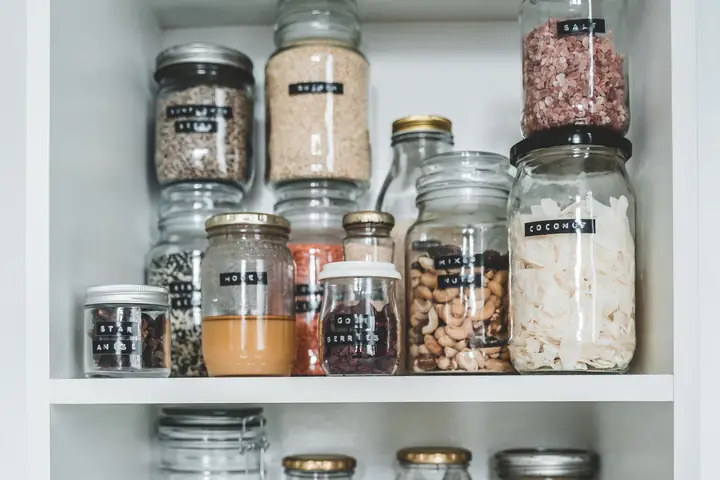
FEMA recommends "first in, first out": put new cans behind the old ones and eat from the front. Rotating through food you already eat keeps your supply fresh without waste. Write the purchase date on each can or box with a marker so you don't have to squint at the label.
Best-by isn't the same as unsafe
The USDA says that except for infant formula, "Best if Used By" and "Use-By" dates are about quality, not safety. Food handled properly stays safe past the date until you see signs of spoilage. Don't eat from cans that are bulging, leaking, badly dented or rusty. Infant formula is the exception: never use it past its date.
Bulk dry goods: Mylar bags and oxygen absorbers
For rice, beans, oats, flour and pasta bought in bulk, many people use Mylar bags with oxygen absorbers. The foil layer blocks light, air and moisture, and the absorber pulls out most of the oxygen that's left, which keeps out insects and slows staleness. Then seal the bag with a hot iron or an impulse sealer, label it and store the bags in a bucket to keep rodents out.
Only use oxygen absorbers with dry foods. Utah State University Extension says to use them with bulk dry foods that are low in moisture and oil. Low-oxygen packaging with moist food can let botulism bacteria grow. Brown rice and nuts also have oils that go rancid faster, so they don't last as long.
Food-grade buckets with gamma lids
A 5-gallon food-grade bucket (look for HDPE, recycling number 2) keeps pests and moisture out. A screw-on gamma seal lid makes it easy to open and reseal the bucket you're eating from. Hardware store buckets that aren't marked food-grade are fine for holding sealed Mylar bags, but don't pour food straight into them.
Keep pests out
Store food off the floor, in sealed metal, glass or thick plastic containers, and check for droppings or holes every so often. USU Extension also mentions a common trick: freezing rice and grains for three days before storing them to kill any insect eggs, then letting them warm to room temperature so condensation doesn't form inside the container.
Gear worth having
These are grouped by the job they do and run from cheap to more expensive. Prices change, so I don't print them. Check the current price on Amazon. When I checked on November 18, the Mountain House and ReadyWise multi-meal buckets and the waterBOB were all showing as unavailable on Amazon, so I left them off.
| Job | Item | Worth knowing |
|---|---|---|
| Water storage | Scepter 5-gallon jug | About 40 lb full. Replace self-filled water every 6 months. |
| Water storage | Augason Farms 55-gallon barrel | About 460 lb full. Pump and wrench not mentioned on the listing. |
| Filter | Sawyer Squeeze | Bacteria and protozoa, not viruses or chemicals |
| Filter | Sawyer 1-gallon gravity kit | Bacteria and protozoa, not viruses or chemicals |
| Food | Mountain House entrée 2-pack | Needs hot water to prepare |
| Food storage | Wallaby Mylar bags and absorbers | Dry, low-oil foods only |
| Food storage | Gamma Seal lid | Bucket sold separately |
| Food prep | Swing-A-Way can opener | Works without power |
| Cooking | Coleman Triton stove | Outdoors only |
Common questions
How much water should I store for an emergency?
Ready.gov and the CDC say to store at least one gallon of water per person per day. The CDC says to keep at least a 3-day supply and to try for 2 weeks if you can. A family of four would need 12 gallons for 3 days and 56 gallons for 2 weeks. Store more for pets, hot weather, nursing mothers and anyone who's sick. The calculator above does the math for your house.
How long does stored tap water last?
The CDC and Ready.gov say to replace water you bottled yourself every six months. For store-bought bottled water, follow the date on the package. Label each container with the date you filled it and keep it somewhere cool, dark and away from chemicals.
How long is food in the fridge safe when the power goes out?
According to FoodSafety.gov, a refrigerator keeps food safe for about 4 hours if you keep the door closed. A full freezer holds a safe temperature for about 48 hours, or about 24 hours if it's half full. Throw out perishable food that's been above 40°F for more than 2 hours. Never taste food to check it. When in doubt, throw it out.
Is it safe to eat canned food past its best-by date?
The USDA says that except for infant formula, date labels like "Best if Used By" are about quality, not safety, and food handled properly should stay safe until signs of spoilage appear. Don't eat from cans that are bulging, leaking, badly dented or rusted, and never use infant formula past its Use-By date.