Home › Communication
Backup communication
Staying in touch when the power's out
Cell service and home Wi-Fi both depend on power somewhere in the chain. A charged phone is still the first thing to try. If the towers are down, or the phone is dead, it helps to have a backup that doesn't use the cell network.
I earn a commission from qualifying Amazon purchases made through links on this page. It doesn't change what you pay, and it doesn't change what I recommend.
Three levels of backup communication
I haven't tested these radios myself. This is the same kind of research as the power stations: spec sheets, manuals, FCC rules and owner reviews. Prices change, so I don't print them here. Check the current price on Amazon.
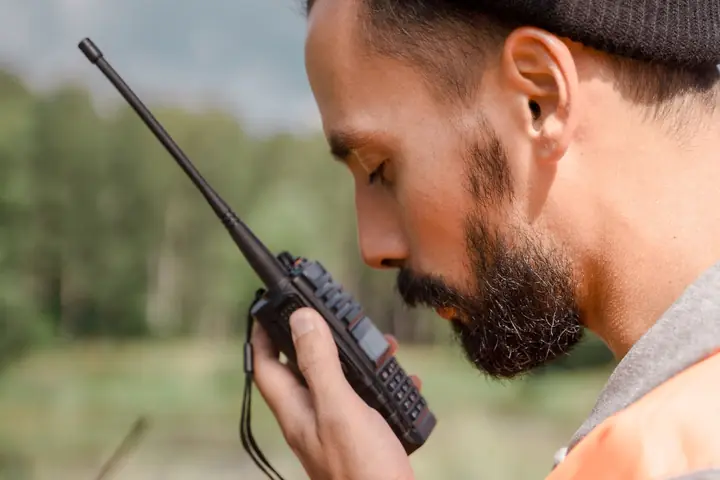
I looked at three levels. Budget is a license-free FRS pair for around the house or the neighborhood. Mid-range is a more powerful GMRS pair. Those need an FCC license: $35 for 10 years, no exam, and it covers you and your immediate family. Premium is a satellite messenger for two-way texts and an SOS that don't depend on local towers. That one needs a paid subscription.
Ready.gov also recommends writing down a family communications plan: who you call, an out-of-area contact, and where you'll meet if you can't get home.
| Level | Model | Service | License or subscription | Could suit |
|---|---|---|---|---|
| Budget | Motorola Talkabout T470 (2-pack) | FRS | None. FRS is licensed by rule. | Neighborhood or family use, no paperwork |
| Mid-range | Midland GXT67 PRO (2-pack) | GMRS | FCC license, $35 for 10 years, no exam | More power and repeater access, if you'll get the license |
| Premium | Garmin inReach Messenger | Satellite (Iridium) | Active Garmin inReach subscription required | Two-way texts or an SOS when local networks are down |
Two other backups are worth a look. A hand-crank NOAA radio is useful for receiving weather alerts when you can't transmit. Several Midland crank models were out of stock when I checked in November 2026; the Kaito KA500 was a currently listed option. And a small car charger, like the Anker 323, can top up phones from a vehicle if the house outlets are dead. If you run the engine, do it outdoors, never in a garage. Both are covered in more detail on the outage essentials page.

Common questions
Do I need a license for walkie-talkies?
It depends on the radio. FRS, the Family Radio Service, is licensed by rule, so you don't need an individual FCC license. GMRS, the General Mobile Radio Service, does require one. The FCC's fee guide, effective May 23, 2025, lists a $35 application fee. The license lasts 10 years, there's no exam, you must be 18 or older to apply, and immediate family members can operate under your license.
Amateur, or ham, radio is a different service. It requires passing an FCC exam. A satellite messenger doesn't use FRS or GMRS frequencies, but its satellite features typically require a paid subscription.
How can I stay in touch if the power and cell service are out?
Start with a charged phone and a way to recharge it, such as a power bank or a car charger used outdoors. If the cell towers are down, license-free FRS walkie-talkies can cover a neighborhood. GMRS radios can offer more power and repeater access after you get an FCC license. A satellite messenger can send two-way texts or an SOS that don't depend on local towers, if you have an active subscription and a view of the sky.
A hand-crank NOAA weather radio is for receiving alerts and news, not for talking to family across town. Ready.gov also recommends writing down a family communications plan. See the communication shortlist for the three options I looked at.